
A key that turns but does not open the door can be confusing. The cylinder may be moving normally while the deadbolt, latch, handle, door alignment or internal connection is preventing the door from releasing. Before replacing the entire lock, a few careful observations can help identify what is actually failing.
Do not force the key, pry the door or keep twisting a handle that feels disconnected. Extra pressure can turn a repairable problem into a broken key, damaged cylinder or bent hardware.
First, notice exactly what moves
Pay attention to the difference between the key, the lock and the door:
- Does the key make a full turn, a partial turn or spin without resistance?
- Does the deadbolt visibly retract?
- Does the handle move the latch?
- Does pushing or pulling the door slightly change how the lock operates?
- If the door is already open, does the same lock work normally without pressure from the frame?
These details help separate a key or cylinder problem from a latch, bolt or alignment problem.
Common reasons the key turns but the door stays locked
1. The deadbolt is binding against the strike
A door can shift slightly because of hinge wear, frame movement, weather or repeated use. The key may turn inside the cylinder, but the bolt remains under pressure where it enters the frame. If gently pushing or pulling the door changes the resistance, alignment may be involved.
2. The latch is not retracting
The keyed lock may be unlocked while a worn handle, spindle or latch mechanism still holds the door closed. A handle that feels unusually loose, stiff or disconnected can point to a latch-side problem rather than a cylinder problem.
3. The key or cylinder is worn
A heavily worn or copied key may lift the pins inconsistently. A worn cylinder can also turn roughly or fail to transfer movement correctly to the rest of the lock. If available, compare the result with a clean spare key, but stop if either key bends or requires excessive force.
4. An internal connection has failed
Inside some locks, a tailpiece, cam or connecting part transfers the cylinder’s rotation to the bolt or latch. If that component is loose, broken or disconnected, the key may rotate without moving the locking mechanism.
5. Moisture, corrosion or debris is affecting movement
South Florida humidity and coastal exposure can affect exterior hardware. Corrosion, residue or swelling around the door can increase friction. Our guide to how South Florida weather affects door locks explains what to watch for and why early inspection matters.
Safe checks you can make without taking the lock apart
- Try a known good spare key if one is available.
- Remove heavy keychains so they do not add sideways pressure.
- While turning gently, test whether light push or pull pressure on the door changes the result.
- Look for fresh rub marks around the latch, bolt or strike plate.
- If the door is already open, observe whether the bolt and latch move freely without contact with the frame.
- Stop immediately if the key starts bending, grinding or becoming difficult to remove.
Avoid drilling, prying or spraying an unknown product into the cylinder. Different locks and finishes require different care, and an unsuitable lubricant can collect debris or affect internal components.
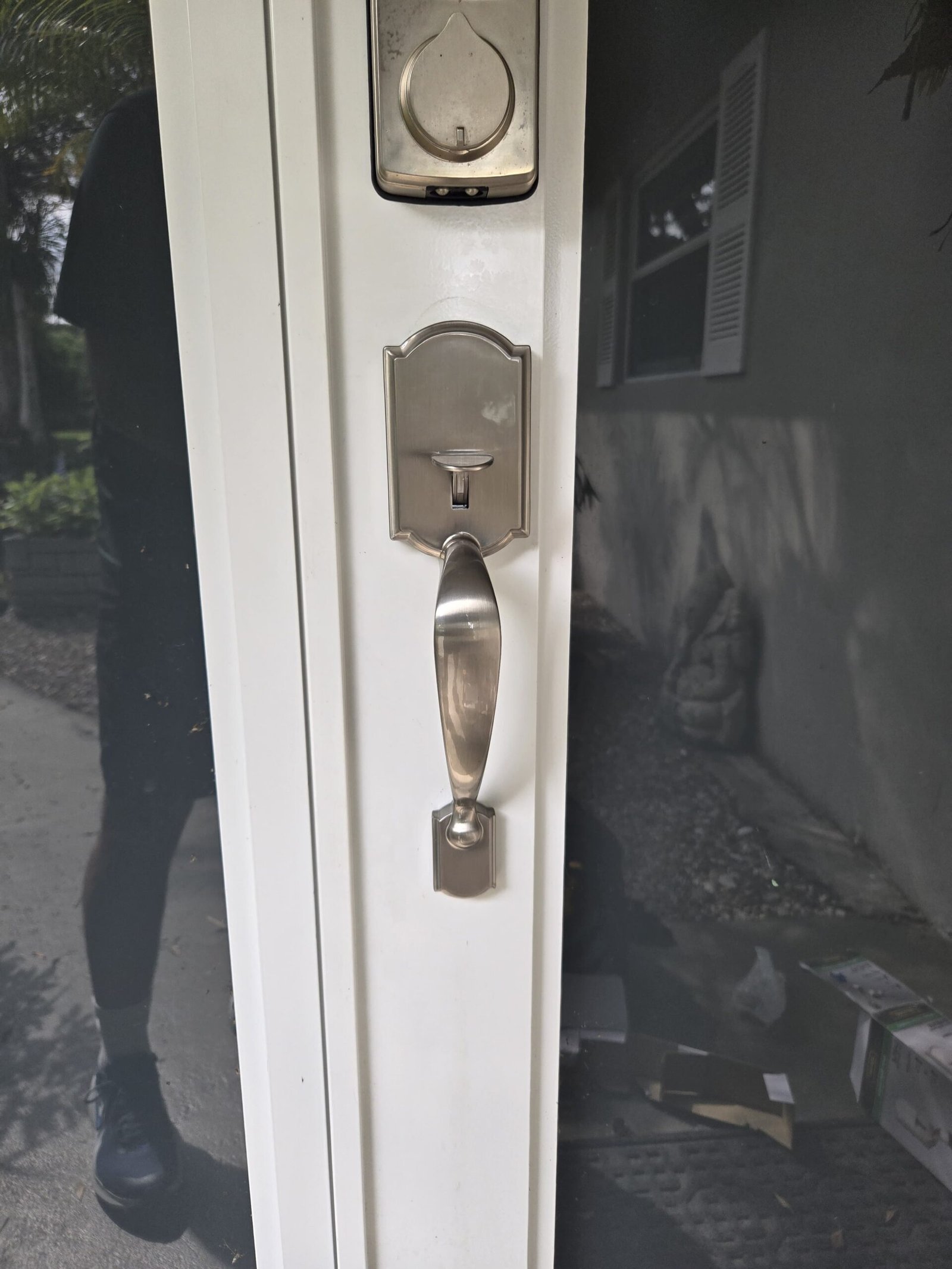
Does the lock need repair, rekeying or replacement?
Rekeying changes which key operates a compatible lock; it does not repair every mechanical failure. If the hardware is serviceable and the main concern is old or missing keys, rekeying may be appropriate. If the latch, bolt, cylinder or connecting parts are damaged or badly worn, repair or replacement may be the better option. See our guide to rekeying versus replacing locks for the main decision factors.
What to tell a locksmith before service
Share the exact location, confirm that you are authorized to request the work and describe whether the door is open or locked. Helpful details include:
- The door material and whether it is an entry, interior, gate or commercial door
- Whether the key turns fully, partly or spins freely
- Whether the handle moves the latch
- Whether pushing or pulling the door changes the problem
- Clear photos of both sides of the hardware and the door edge, when possible
Those details can help distinguish an access problem from a hardware or alignment problem before the visit. For service options, review our residential locksmith services or lockout guidance.
Frequently asked questions
Does a spinning key always mean the cylinder is broken?
No. The cylinder may be worn, but a disconnected tailpiece or another internal component can produce a similar symptom. The hardware should be inspected before deciding what to replace.
Can rekeying fix a door that will not open?
Only when the underlying hardware is working correctly and the issue is related to key control or cylinder operation. Rekeying does not correct a bent latch, failed handle or severe door misalignment.
Why does the lock work when the door is open but not when it is closed?
That often points to contact or pressure between the bolt or latch and the strike area. Hinge movement, frame alignment or door swelling may be contributing factors.
Need help diagnosing the problem?
Call or text LRG Locksmith at 754-226-6934 with your location and a short description of what the key, lock and door are doing. You can also use the contact page to send the details.